

Tom Giovanetti is president of the Institute for Policy Innovation (IPI), a 38-year-old conservative, free-market public policy “think tank” based in Dallas, Texas.
In addition to his administrative and fundraising duties, Tom writes for IPI and for leading publications on a variety of policy topics including tax policy, economic growth, self-government, civil liberties and constitutional protections, judicial supremacy, intellectual property, Social Security personal accounts, technology and Internet policy, and government spending. In addition to being regularly published in major outlets including the Wall Street Journal, Washington Times, FoxNews.com and The Dallas Morning News, Tom writes often for the Fort Worth Star-Telegram. Tom frequently appears in the media and is a regular guest and occasional substitute host of the Mark Davis Show in the Dallas-Fort Worth market.
Tom loves thinking out-of-the-box to design novel solutions to policy problems and explaining complicated policy issues in ways average folks can understand.
Tom's mission at IPI is to use issues to teach conservative, free market thinking and to push back against unprincipled populism. He seeks to encourage continued skepticism of Big Government, to maintain faith in markets, and to defend individual liberty as the best means of achieving human flourishing. His most recent work has focused on free market solutions to student loan debt, preserving online freedom, and persuading state legislatures to override local and municipal rules that restrict economic liberty.
Mr. Giovanetti has represented IPI at many national and international organizations, including the World Intellectual Property Organization (WIPO), the Internet Governance Forum (IGF), and represented IPI during negotiations on the Trans-Pacific Partnership (TPP) trade agreement. Mr. Giovanetti is a popular speaker and writer and testifies before state and federal legislative committees on a variety of topics.
Follow Tom on Twitter (X) at @tgiovanetti

A Way to Solve America's Rural Health Crisis
Expanding access to PACE will not solve every challenge facing rural healthcare, but it provides one of the most promising opportunities to help. PACE has already proven it can provide quality care to rural America. The question now is whether policymakers are willing to remove the barriers standing in its way.

Bigness Is Not a Crime. Let Union Pacific and Norfolk Southern Merge
The proposed merger of Union Pacific and Norfolk Southern would create the first single-line railroad from coast to coast, and it would be built with private capital. No federal grant money to get it done or no new program out of D.C.
The Affordability Crisis Began with a Lie
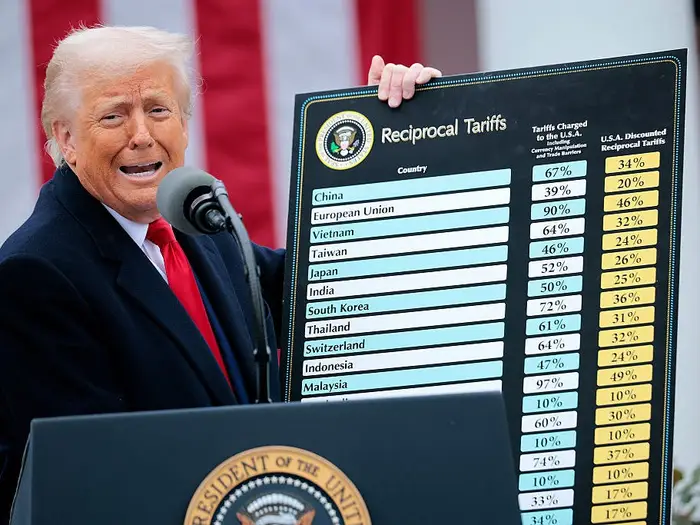
The affordability crisis began with one of the biggest lies of them all: American consumers won’t pay the tariffs.

The Bill of Rights Is Not the Key to Our Liberty
Caesarism is possible when the legislative branch, whether in ancient Rome or modern America, abandons its duty to provide a check on the executive. Left unchecked, a popular elected executive can marginalize all other branches of government, with the support of the people.

The Data Center Gold Rush Won't Last Forever
Data centers are terrific assets to a community or region. But this pace of construction won’t last forever. Eventually the buildout will crest, capital will become more selective, technology will become more efficient, and the gold rush will dwindle. And if you missed out, you missed out, and you’ll probably regret it.

Our Take: The Gorsuch Warning (on Slaughter)
Congress spent decades transferring legislative and judicial powers to supposedly independent agencies. That was a violation of the nondelegation doctrine, but that’s another topic. Now, after the administrative state has accrued enormous powers, the court has given the president total control.
The constitutional answer is not to deny that the president controls the executive branch. The answer must be for Congress to reclaim the powers it should never have delegated.

We Can't Work It Out
Why can’t Republicans and Democrats work together to solve problems? If you want your representatives to fight for you and destroy those who disagree with you, I’m sorry, but consider the possibility that you’re the problem.
There's No Such Thing as a Free Input
Data centers pay for their electricity. They pay for their water. And AI should pay for its content inputs, too.
Why the Blanching over Todd Blanche?
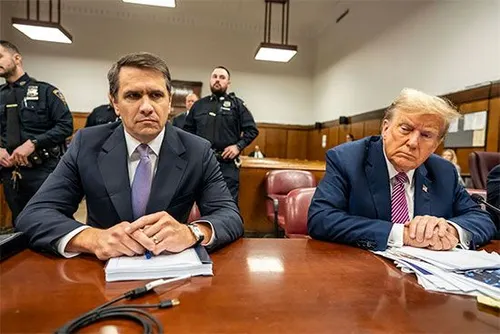
How can it possibly be ethical for a president to sue an agency he completely controls, and negotiate a settlement with an attorney general he appointed? That’s not a negotiation between adversarial parties—that’s a sweetheart deal—especially since Trump was not going to win any of those lawsuits or claims on their merits.

Election Security Is None of the President's Business
The Constitution gives states control over their own elections. Executive branch interference in state elections is a violation of separation of powers. If Washington attempts to influence or take control of state elections, the states should resist, for the sake of the Republic.
Total Records: 773
